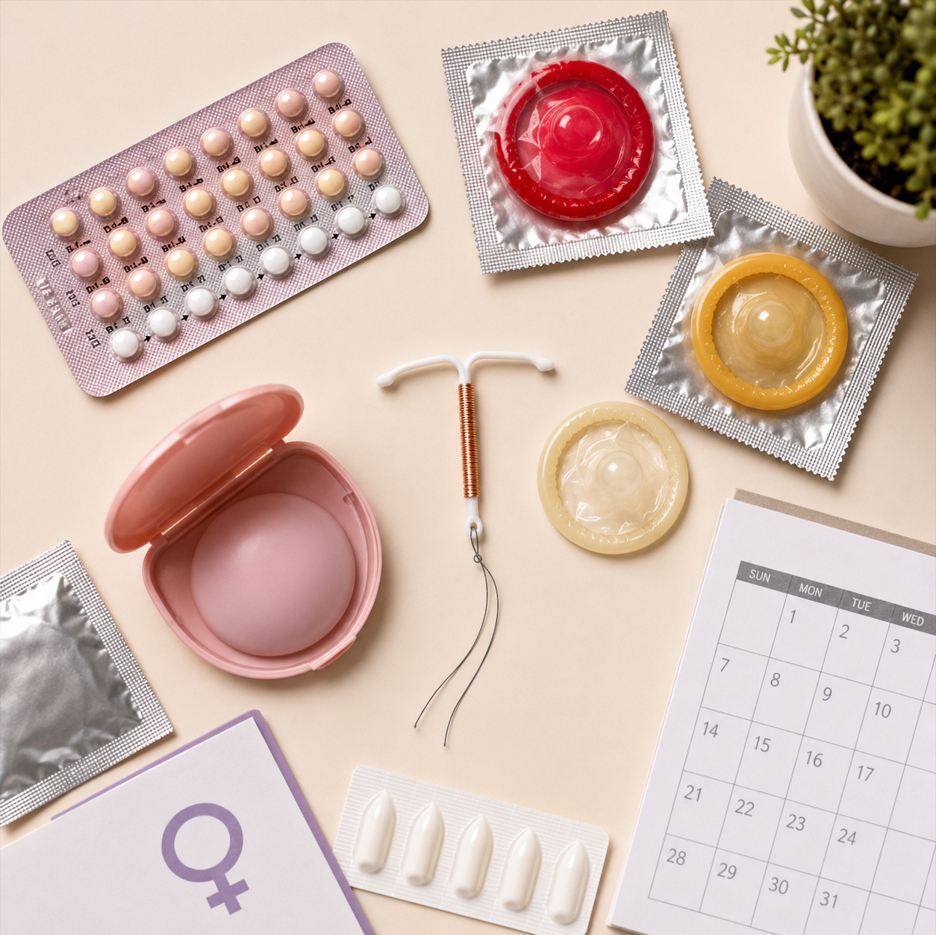
💊 The Contraceptive Pill
The contraceptive pill continues to be one of the most widely used forms of birth control, particularly in Western European countries.
Many women choose the pill because it offers reliable pregnancy prevention when taken correctly and may also help regulate menstrual cycles.
Advantages
✅ Highly effective when used correctly
✅ Can help regulate menstrual cycles
✅ May reduce menstrual discomfort
Potential Considerations
⚠️ Requires consistent daily use
⚠️ May cause side effects such as headaches or mood changes in some users
⚠️ Certain formulations may increase the risk of blood clots for some women
The contraceptive pill remains especially popular in countries such as Germany and France, where access to reproductive healthcare services is well established.
🟢 Condoms
Condoms remain one of the most accessible and widely recognised contraceptive methods in Europe.
Unlike most other contraceptive options, condoms provide protection against both pregnancy and sexually transmitted infections (STIs), making them a valuable choice for many individuals and couples.
Advantages
✅ Help prevent pregnancy
✅ Protect against many sexually transmitted infections
✅ Available without a prescription
✅ Easy to obtain and use
Potential Considerations
⚠️ Effectiveness depends on correct and consistent use
⚠️ Can break or slip if not used properly
Condom use remains particularly common among younger adults and continues to be a popular contraceptive option in countries such as Italy and Spain.
🔄 Withdrawal Method (Interrupted Intercourse)
The withdrawal method, also known as interrupted intercourse, is one of the oldest forms of contraception.
Although modern contraceptive methods are widely available, withdrawal remains relatively common in some parts of Europe.
Advantages
✅ No cost involved
✅ No hormones or medical procedures required
✅ Easily accessible
Potential Considerations
⚠️ Lower effectiveness compared with modern contraceptive methods
⚠️ Greater risk of unintended pregnancy
⚠️ Requires considerable self-control and correct timing
Healthcare professionals generally consider withdrawal less reliable than methods such as condoms, hormonal contraception, or IUDs.
🌀 Intrauterine Devices (IUDs)
IUDs have become increasingly popular throughout Europe as a long-term contraceptive solution.
These small devices are inserted into the uterus by a healthcare professional and can provide protection against pregnancy for several years, depending on the type used.
Advantages
✅ More than 99% effective
✅ Long-lasting protection
✅ No daily action required
✅ Suitable for many women seeking a low-maintenance contraceptive option
Potential Considerations
⚠️ Temporary discomfort during or after insertion
⚠️ Requires a medical procedure
⚠️ Rare complications may occur and should be discussed with a healthcare professional
IUD use is particularly common in countries such as France and the United Kingdom, where awareness of long-acting reversible contraception continues to grow.
📊 Contraceptive Use Across Europe
Although contraceptive preferences differ between countries, studies consistently show that a large majority of European women use some form of contraception during their reproductive years.
🇭🇷 Croatia
- Traditional methods remain relatively common.
- Access to healthcare and educational differences can influence contraceptive choices.
🇩🇪 Germany
- The contraceptive pill remains widely used.
- Condoms are also a popular choice.
🇮🇹 Italy
- Condoms and oral contraceptives are among the most common methods.
- Personal and cultural preferences strongly influence contraceptive decisions.
🇪🇸 Spain
- Condom use remains widespread.
- Some traditional methods continue to be used alongside modern contraception.
🇬🇧 United Kingdom
- The pill and IUDs are among the most frequently used options.
- Strong healthcare access supports a broad range of contraceptive choices.
🇫🇷 France
- Hormonal contraception remains highly popular.
- IUD usage is among the highest in Europe.
⚖️ Comparing Common Contraceptive Methods
MethodTypical EffectivenessKey Considerations💊 Contraceptive PillUp to 99% with correct useRequires daily use🟢 CondomsApproximately 85–98%Also protects against STIs🔄 WithdrawalAround 78%Higher risk of unintended pregnancy🌀 IUDOver 99%Long-term protection
No contraceptive method is perfect for everyone. The most appropriate choice depends on individual health needs, lifestyle, reproductive goals, and personal preferences.
👩⚕️ What Do Healthcare Professionals Recommend?
Healthcare professionals often recommend discussing contraceptive options with a qualified medical provider before making a decision.
Experts generally highlight the importance of:
📚 Comprehensive contraceptive education
🏥 Access to healthcare services
💬 Open discussions about reproductive health
🩺 Personalised medical advice based on individual circumstances
The most effective contraceptive method is often the one that an individual can use consistently and correctly.
🌱 The Future of Contraception in Europe
Contraceptive trends across Europe continue to evolve.
Growing awareness, improved healthcare access, and advances in reproductive medicine are helping individuals make more informed choices than ever before.
Key trends expected to continue beyond 2025 include:
✨ More personalised healthcare approaches
✨ Greater awareness of contraceptive options
✨ Improved access to reproductive health information
✨ Increased use of long-acting reversible contraception
As reproductive healthcare continues to develop, individuals will have more opportunities to choose contraceptive methods that align with their personal needs and lifestyles.
Conclusion
There is no single contraceptive method that is right for everyone.
The most suitable option depends on a combination of health factors, personal preferences, lifestyle, and access to healthcare. Understanding the advantages and considerations of each method can help individuals make informed decisions about their reproductive health.
Whether choosing condoms, hormonal contraception, an IUD, or another method, informed decision-making and professional medical guidance remain essential.
Medical Disclaimer
This article is intended for informational purposes only and should not be considered medical advice. Always consult a qualified healthcare professional before choosing or changing a contraceptive method.
Find the Right Contraception Option for You
Learn more about contraception methods, benefits, and risks to make informed choices for your health and lifestyle.
Learn More