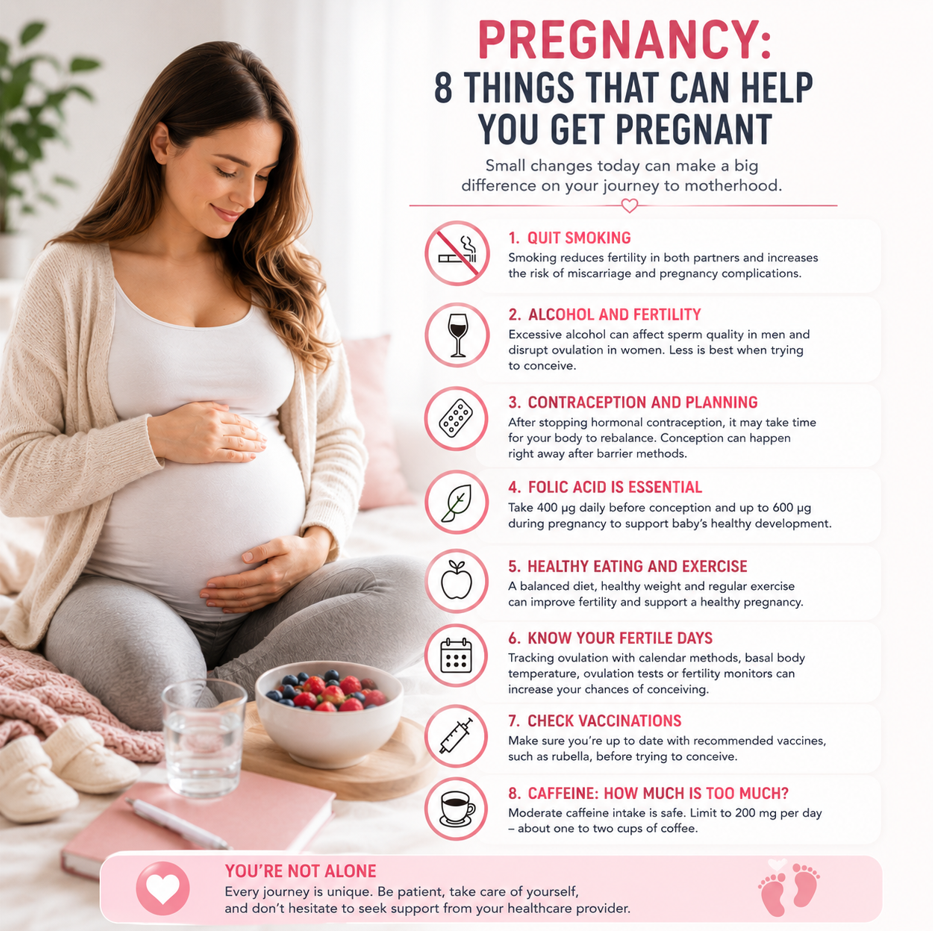
💡 Preparing for Pregnancy Starts with Good Planning
Trying for a baby is an exciting journey that often begins long before conception. While fertility is influenced by many factors, making informed lifestyle choices can help improve your chances of becoming pregnant.
Here are eight important things to consider when planning a pregnancy.
🚭 1. Quitting Smoking Can Improve Fertility
Smoking has a significant negative impact on fertility in both women and men.
It can reduce the chances of conception and has been linked to an increased risk of miscarriage, pregnancy complications, and premature birth.
If you're planning to start a family, quitting smoking is one of the most important steps you can take to support your reproductive health.
🍷 2. Alcohol and Fertility
Excessive alcohol consumption may make it more difficult to conceive.
In men, alcohol can affect sperm quality, while in women it may disrupt the menstrual cycle and ovulation.
Reducing or avoiding alcohol while trying to conceive can be beneficial for both partners.
💊 3. Contraception and Pregnancy Planning
After stopping hormonal contraception, such as the contraceptive pill, the body may need some time to return to its natural hormonal balance.
As a result, pregnancy may not occur immediately.
With barrier methods, such as condoms, conception can be possible as soon as the next fertile cycle.
🧬 4. Folic Acid Is Essential
Folic acid (vitamin B9) plays a vital role in healthy fetal development, particularly during the early stages of pregnancy.
Healthcare professionals commonly recommend taking folic acid before conception.
The usual recommendation is around 400 micrograms per day before pregnancy and up to 600 micrograms during pregnancy, depending on individual medical advice.
🥗 5. Healthy Eating and Regular Exercise
A healthy lifestyle can have a positive impact on fertility.
Eating a balanced diet, maintaining a healthy weight, and engaging in regular physical activity can help prepare the body for pregnancy and support overall wellbeing.
🌸 6. Knowing Your Fertile Days Matters
Pregnancy can only occur during the fertile window of the menstrual cycle.
Identifying fertile days accurately may significantly increase the chances of conception.
Common methods include:
📅 Cycle tracking
🌡️ Basal body temperature monitoring
🧪 Ovulation tests
🔬 Fertility monitoring devices
Understanding your cycle can be a valuable tool when trying to conceive.
💉 7. Check Your Vaccinations Before Pregnancy
Certain illnesses, such as rubella, can cause serious complications during pregnancy.
For this reason, it's advisable to review your vaccination status before trying to conceive and discuss any necessary vaccinations with your healthcare provider.
☕ 8. Caffeine: How Much Is Too Much?
Moderate caffeine consumption is not generally considered harmful to fertility.
Current guidelines typically recommend limiting caffeine intake to no more than 200 mg per day, which is approximately one to two cups of coffee, depending on the type and strength of the drink.
✨ Small Changes Can Make a Big Difference
Fertility is influenced by many factors, some of which can be improved through healthy lifestyle choices.
Eating well, managing stress, avoiding smoking, and understanding your menstrual cycle can all help support your journey towards pregnancy.
Every fertility journey is unique, but good preparation can help you feel more confident and informed along the way.
Medical Disclaimer
This article is intended for informational purposes only and should not be considered medical advice. Always consult a qualified healthcare professional regarding fertility, pregnancy planning, and reproductive health decisions.
Understand Your Fertility Better
Track your fertile days and make informed decisions as you plan for pregnancy and parenthood.
Learn More